
【Edible Gemstones】Tried Kohakutou and Discovered… Crunchy Outside, Jelly Inside – A Double-Act Japanese Sweet!
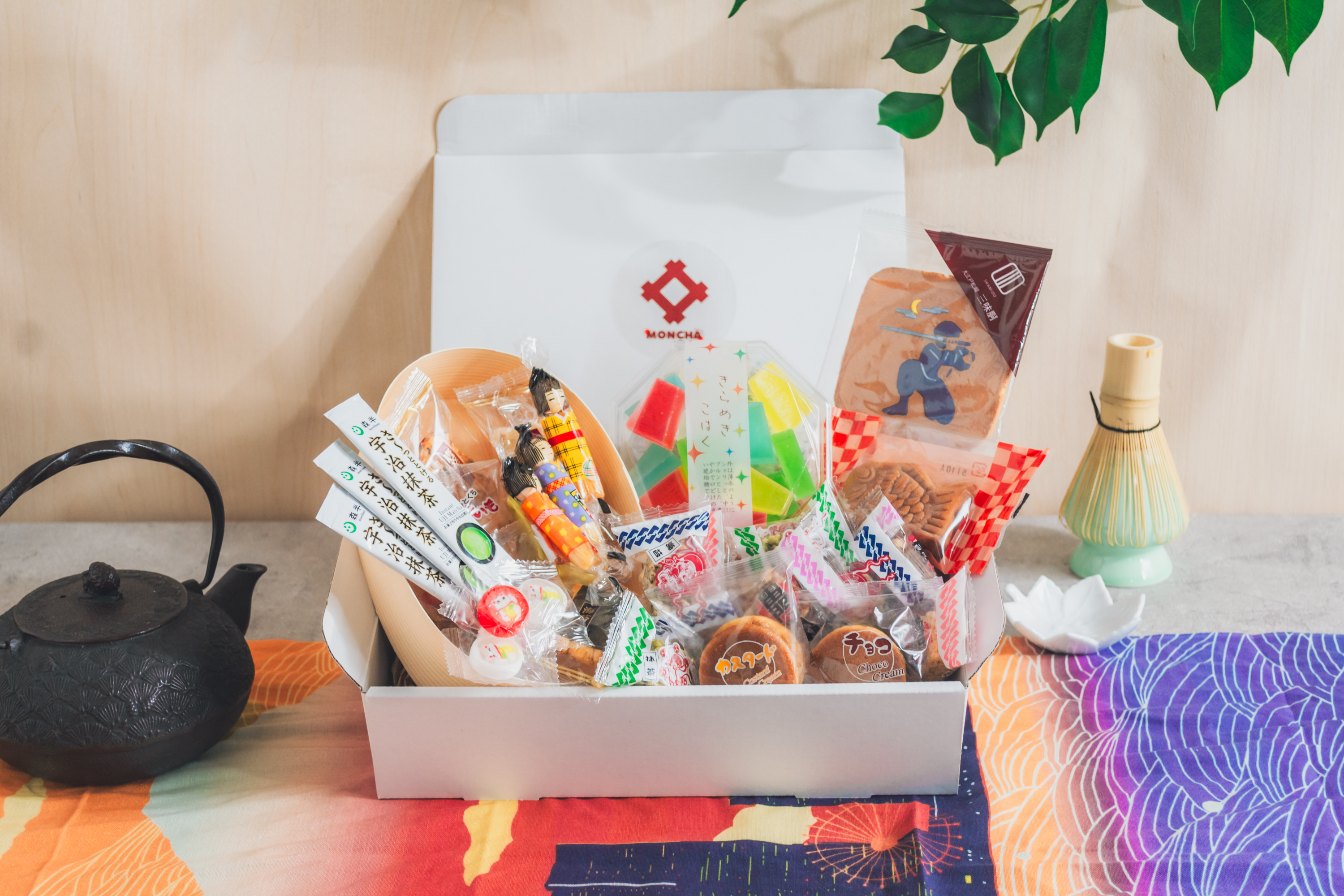
At first glance, it looks like sparkling gemstones.
But in reality, it’s candy. Meet Kohakutou (琥珀糖), literally “amber sugar.”
In recent years, it’s gone viral on Japanese social media under the nickname “edible gemstones.” With its dazzling, jewel-like appearance, it became a favorite for Instagram photos. Honestly, I thought it was just a trendy new sweet made for the gram… but here’s the twist: Kohakutou is actually a traditional Japanese confection with a history of over 200 years, dating back to the Edo period. Now that’s some serious heritage behind the sparkle!
First Bite: A Sweet Surprise
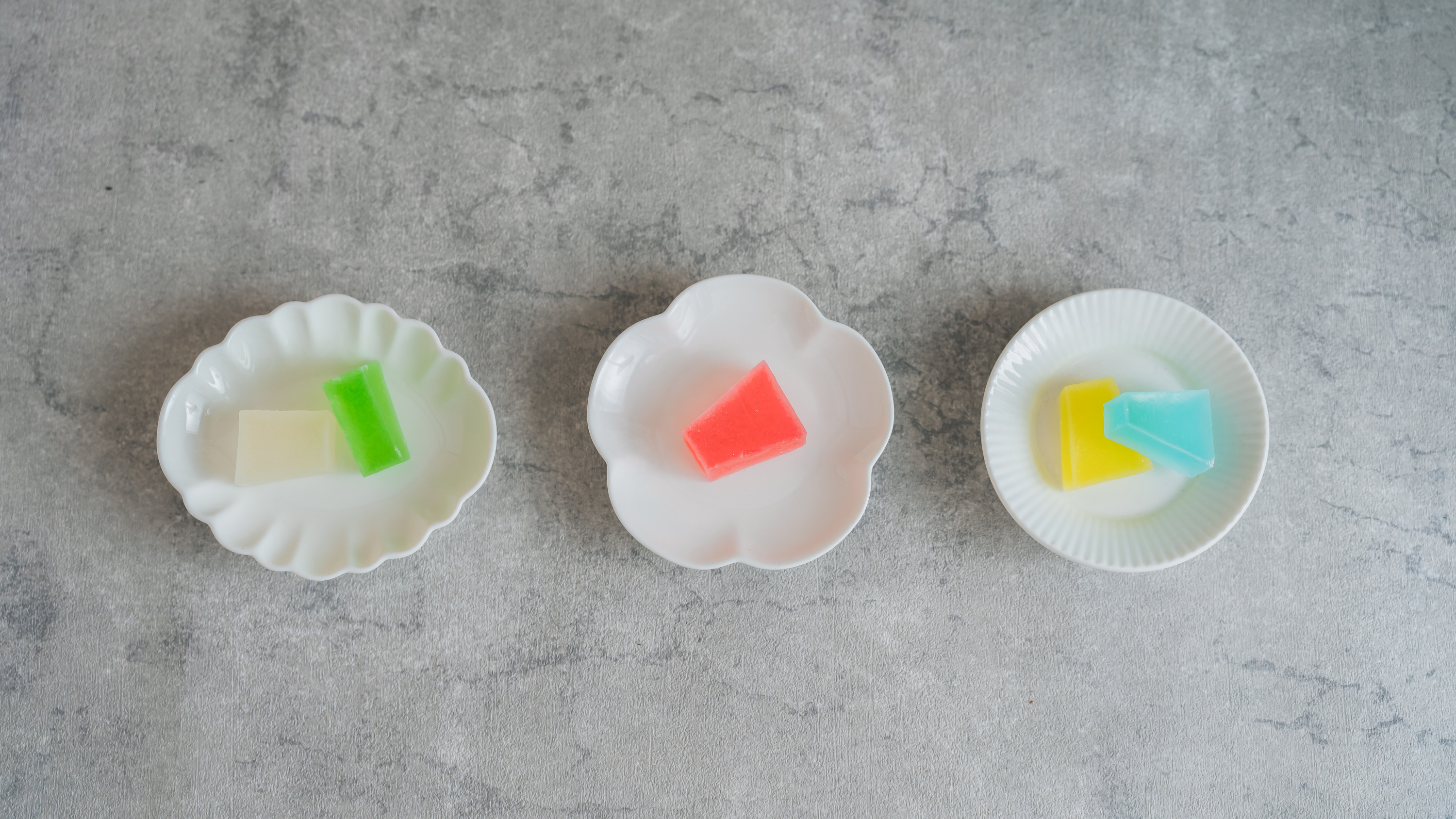
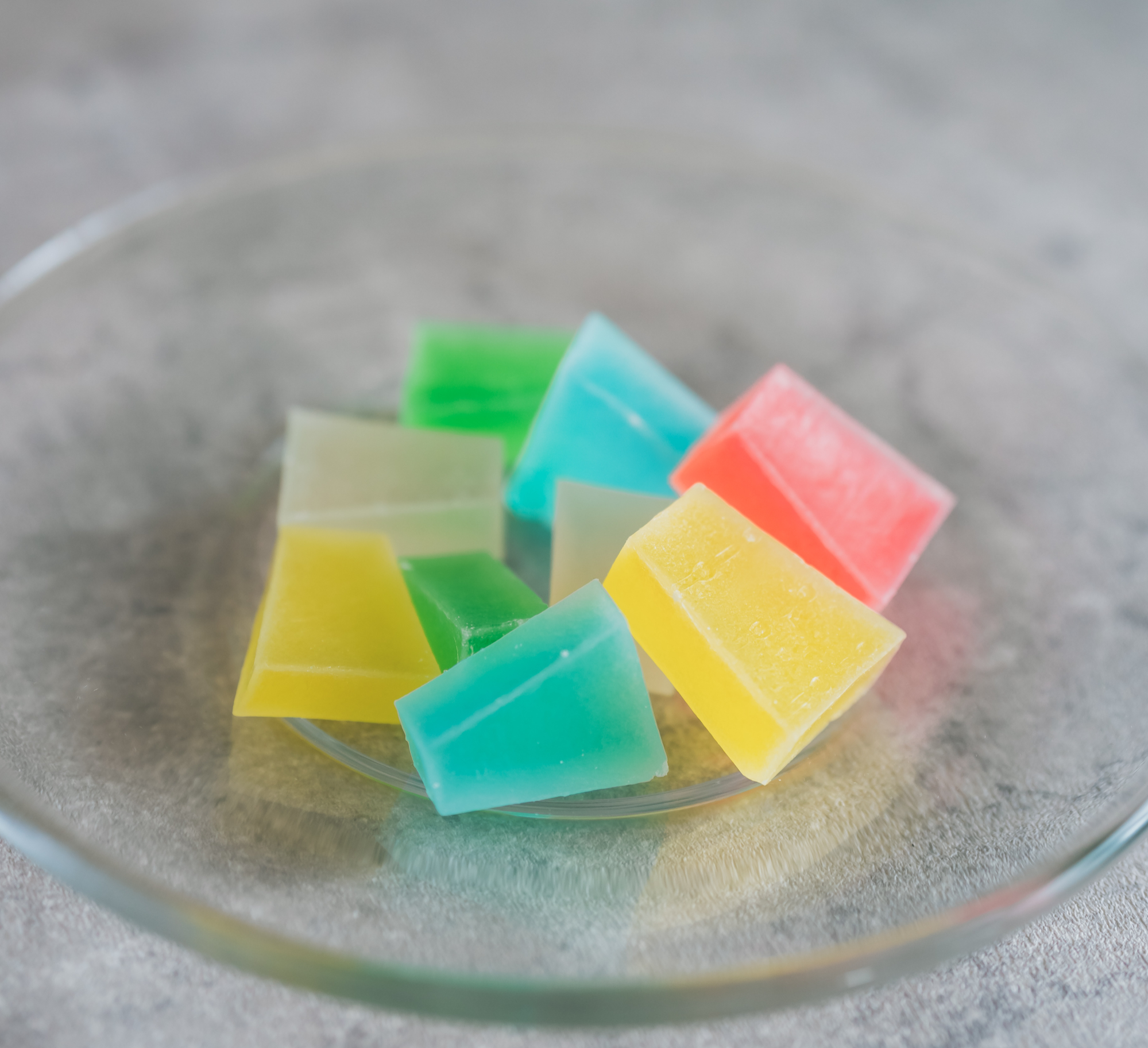
Let’s start with the looks. Transparent, colorful, and shimmering—when you hold it up to the light, it glitters like real crystals. No wonder people can’t resist snapping photos.
Then comes the bite.
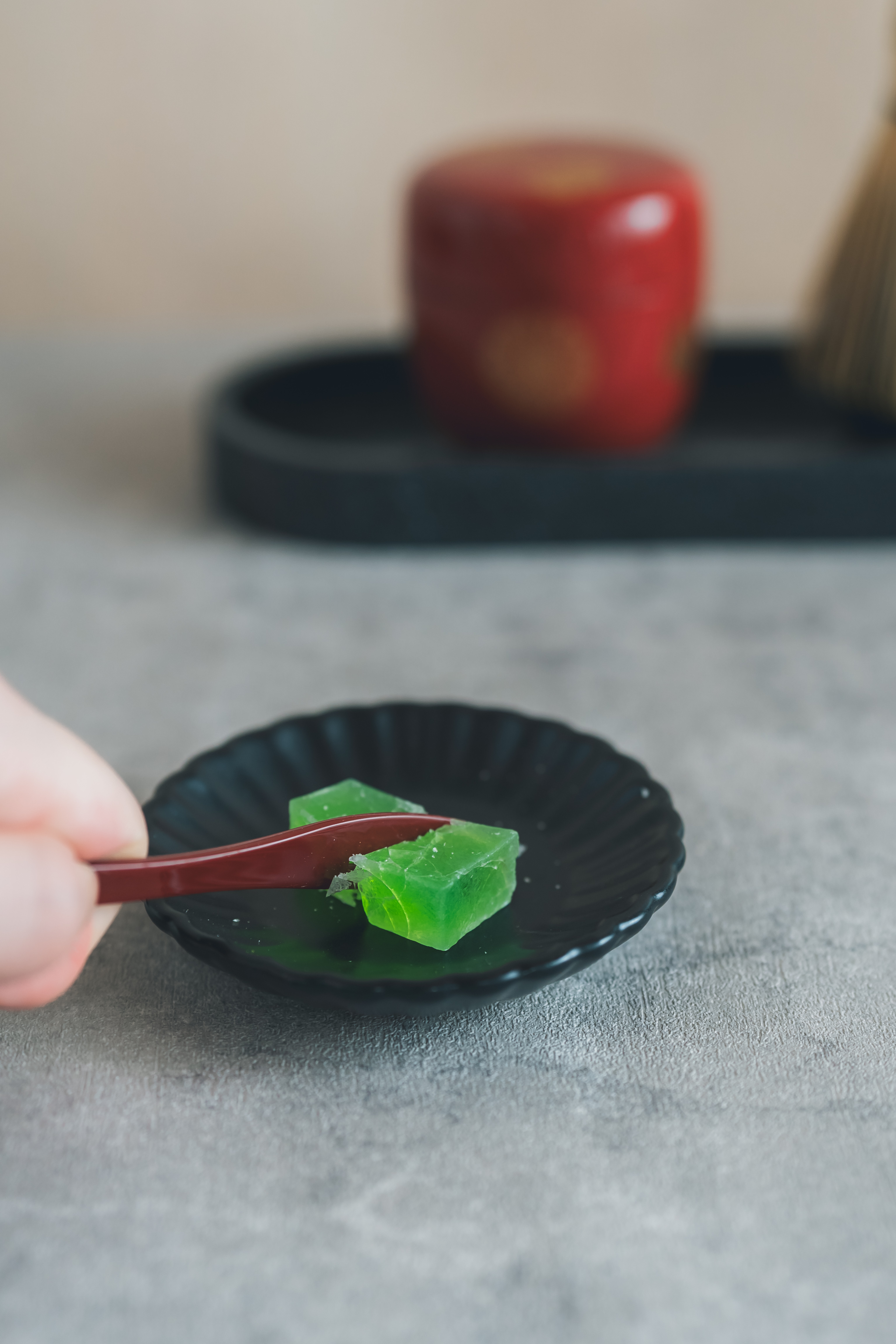
…Wait, what?! The outside is crispy and crunchy, thanks to crystallized sugar, but the inside is soft and jelly-like.
It’s a unique texture combo—crunchy on the outside, jiggly on the inside—that makes every bite addictive. The sweetness is simple, not overwhelming, and you’ll find yourself reaching for another before you realize it.
A Veteran with Deep Roots
While it looks like a modern Instagram darling, Kohakutou’s roots go way back.
It originated in Kyoto during the Edo period (1603–1868) and was originally called “Kingyokukan (錦玉羹)”, a type of agar jelly made with sugar.
Later, when gardenia fruit was used for coloring, the candy took on a warm, amber-like hue—hence the name “Kohakutou,” meaning amber sugar. What started as an elegant confection for the aristocracy eventually spread more widely, cherished for both its beauty and taste.
So while it may look like a trendy newcomer, it’s actually a time-tested veteran of Japanese sweets, perfected over two centuries.
Still a Star in Modern Japan
Fast forward to today: Kohakutou has found a new wave of fans online.
Search “#kohakutou” on Instagram or TikTok, and you’ll see endless photos and videos of these sparkling gems. The visual appeal is so strong that it even led to shortages when demand spiked.
In places like Asakusa or Kyoto, you can still find Kohakutou crafted by long-established wagashi shops, often with seasonal colors or designs. It’s not just a sweet—it’s a perfect souvenir, a gift, and a cultural experience all in one.
In Summary
Kohakutou is:
A jewel-like sweet that shines like real gemstones
A playful double-texture treat: crunchy outside, jelly inside
A confection with over 200 years of history, deeply rooted in Japanese culture
More than just an “Instagram candy”, it’s truly a superstar of the wagashi world.
In our Moncha BOX, you’ll find Kohakutou alongside other traditional Japanese sweets and matcha. Even if you can’t come to Japan right now, you can still experience the sparkle, taste, and history of this edible gemstone.