
Tokyo Station — The Sound of Rice at the Starting Point of the Five Highways
Opening the Box
The lid lifts to reveal a pale golden surface. Thin rice crisps rest in careful rows, each one light enough to pick up between your fingers. When it breaks, the sound is dry and delicate. Sometimes a journey begins with something as small as that — a quiet snap that echoes a little longer than expected.
Tokyo Connected — Stations and Memory
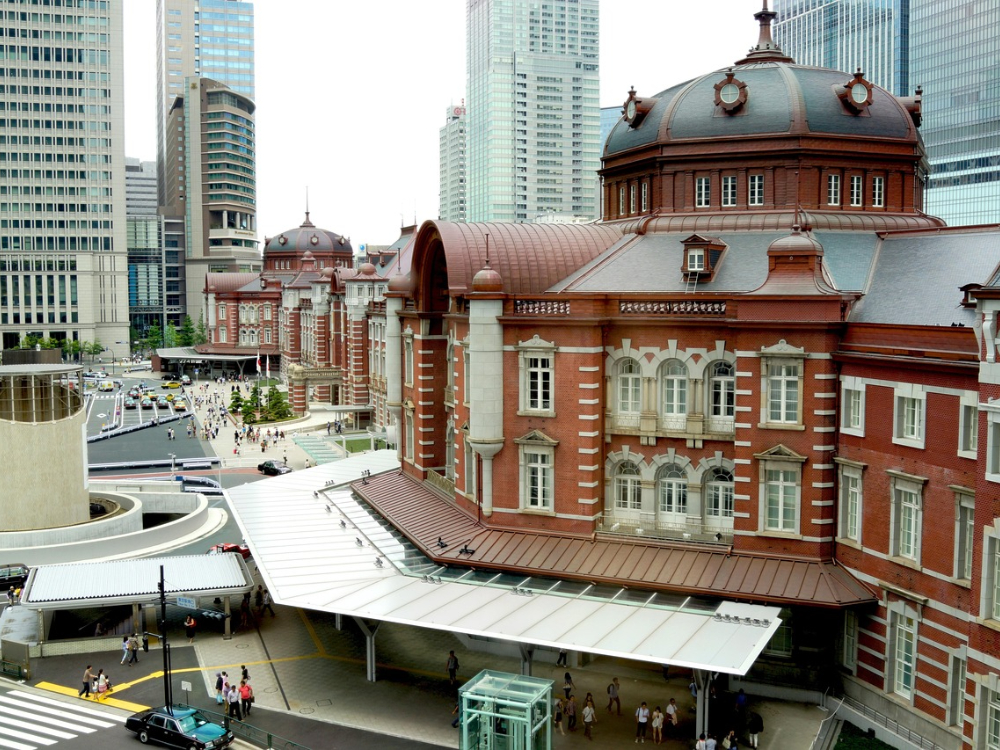
Tokyo unfolds in lines. Station to station, the city reveals older layers beneath its glass and steel. At the center stands Tokyo Station, where morning light touches the red-brick walls and suitcase wheels rattle softly across the floor. Somewhere below, a train door slides shut. Leaving the flow of commuters behind, the road begins to turn toward Nihonbashi.
From Brick to Bridge
Outside the station, the air shifts slightly, calmer than the platform you just left. Between office towers, the trace of an older road still lingers. Nihonbashi. In the Edo period, every highway in Japan began here. The stone bridge stretches quietly across the river while water moves slowly below. A breeze passes across its surface, and from a nearby street comes the metallic sound of a shop shutter rising for the day.
Layers Beneath the City
In this district, rice once meant far more than food. It measured wealth, and merchants watched rice prices the way traders follow markets today. Moving through that same economy were small oval coins — Keicho koban — pieces of gold that carried the weight of a growing city.
Note — Keicho Koban
Gold coins first minted in 1601 under Tokugawa Ieyasu. Their oval shape became one of the enduring symbols of Edo’s economy.
A Crisp Called “Keicho”
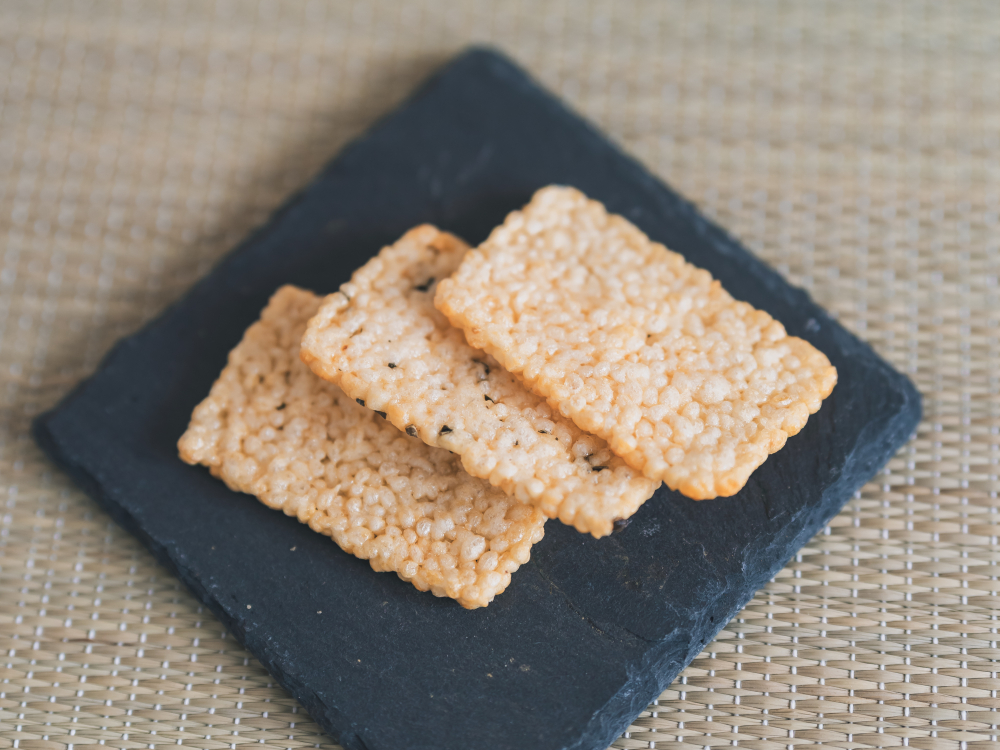
This name is Keicho, and its shape quietly echoes those old coins. Placed in the palm, it feels almost weightless — less like gold, more like rice.
Note — Akasaka Kakiyama
A rice-cracker maker based in Tokyo’s Akasaka district. Their crisps use Toyama-grown Shin-Taisho glutinous rice, baked in a way that preserves the character of each grain.
Taste, Aroma, Texture
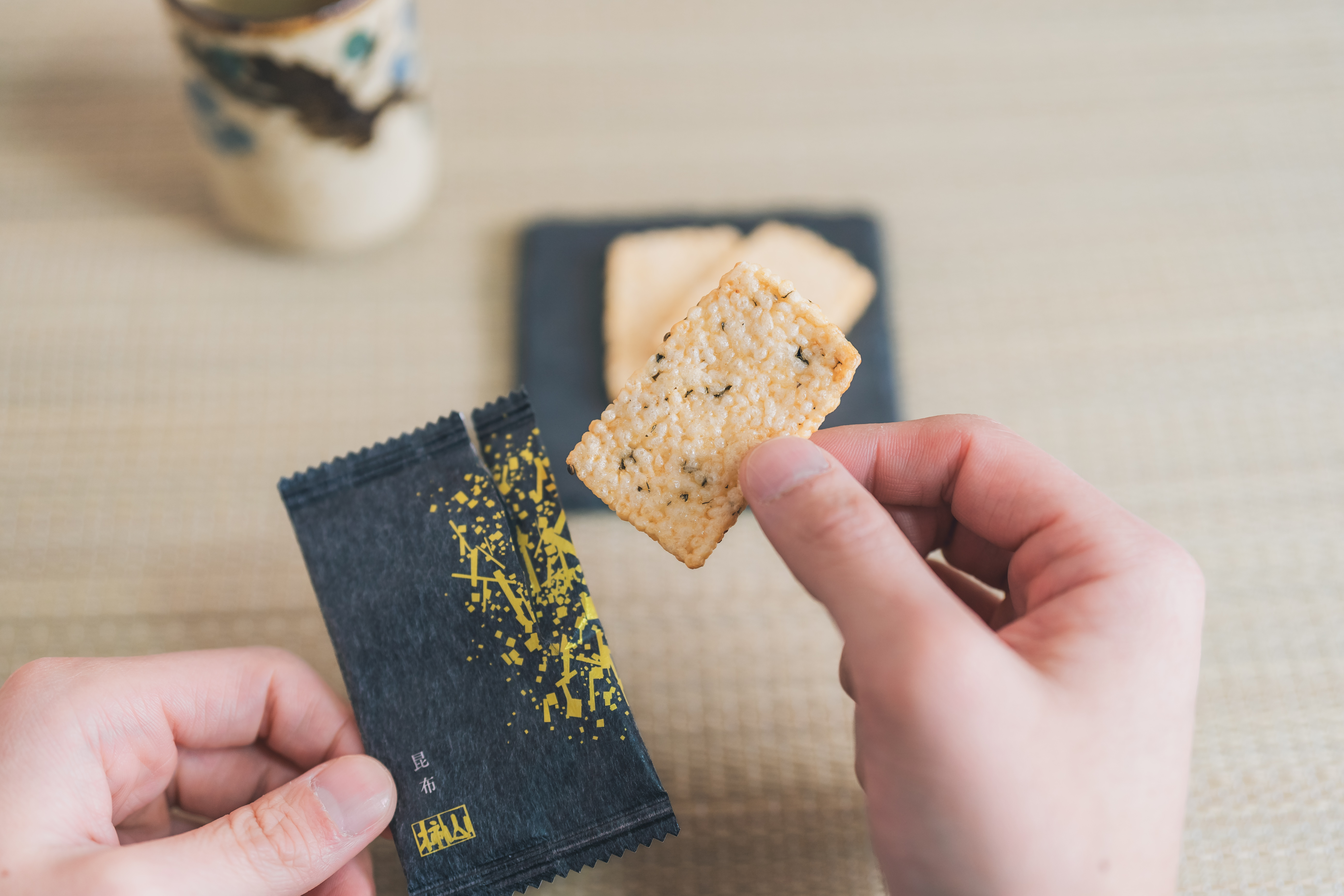
Inside the box lies a narrow rectangle, thin enough for the texture of each rice grain to show on its surface. Break it and a soft crack follows. The aroma rises gently — soy sauce first, then a quiet hint of kombu. The texture is fragile at the first bite, yet the grains slowly loosen as you chew. Soy. Kombu. A subtle sweetness from the rice itself. When it’s gone, the aroma lingers for a moment longer.
On the Bridge

A hand rests on the railing of Nihonbashi. Water slides beneath the bridge while footsteps pass behind you and cars hum above on the expressway. In the distance, a train arrives somewhere along the line. Old Edo and modern Tokyo seem to move forward together in the same current.
A Quiet Moment
Take one piece from the box and allow a small pause in the day. There is no need to hurry. Before the rice aroma fades, take a slow bite. Evening light settles by the window while water begins to boil for tea. Somewhere in the distance, another train passes. And again, that small sound — the crisp breaking.
The Journey Continues
From Tokyo Station to Nihonbashi, the city keeps moving.
Next station: Nihonbashi
The journey is still unfolding.
FAQ
What is Keicho?
Keicho is an ultra-thin rice crisp made by Akasaka Kakiyama, known for its delicate texture and the natural flavor of glutinous rice.
Why is it called Keicho?
The shape is inspired by the historic Keicho koban, a gold coin used in early Edo-period Japan.
Can it be found outside Tokyo Station?
Yes. It is also available at the Akasaka main store and selected department stores in Tokyo.
How should it be enjoyed?
Take one piece from the box and eat it slowly, noticing the aroma of rice and the gentle crisp texture.