
Mooncakes Found in Shinjuku | A Chinese Sweet Opening into Tokyo’s Many-Layered City
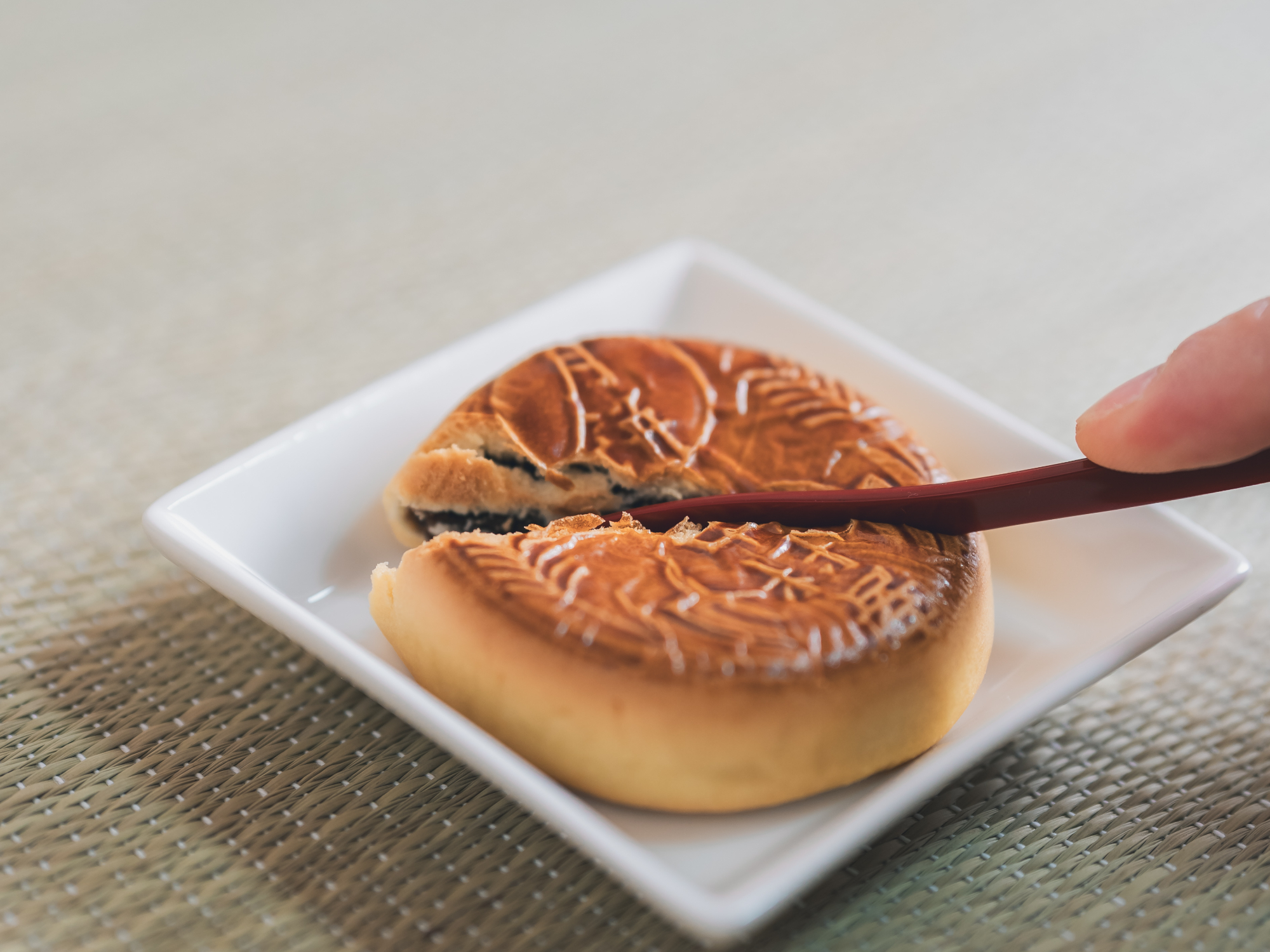
A Chinese Sweet Opening into Tokyo’s Many-Layered City
Shinjuku feels to me like a city made from more than one culture. Around its vast station, people gather, head toward other neighborhoods, and bring with them other languages, other scents, other rhythms.
The lights are strong, the sounds never stop, and the pace is fast. And yet beneath all of that, there is a sense that things with very different backgrounds stand naturally side by side.
In the middle of my Tokyo, Connected journey, what I found in this part of the city was a sweet that seemed to suit Shinjuku perfectly.
Mooncake. Originally a traditional sweet beloved in China, it is also a confection that, in Japan, has gradually opened into a form that feels at home in the life of this city.
It carries the outline of somewhere beyond Japan, and yet it does not feel out of place in the Tokyo landscape. If anything, it seems to have quietly found its place within the many layers of Shinjuku itself.
Place where I traveled: Shinjuku, a gateway where many things meet
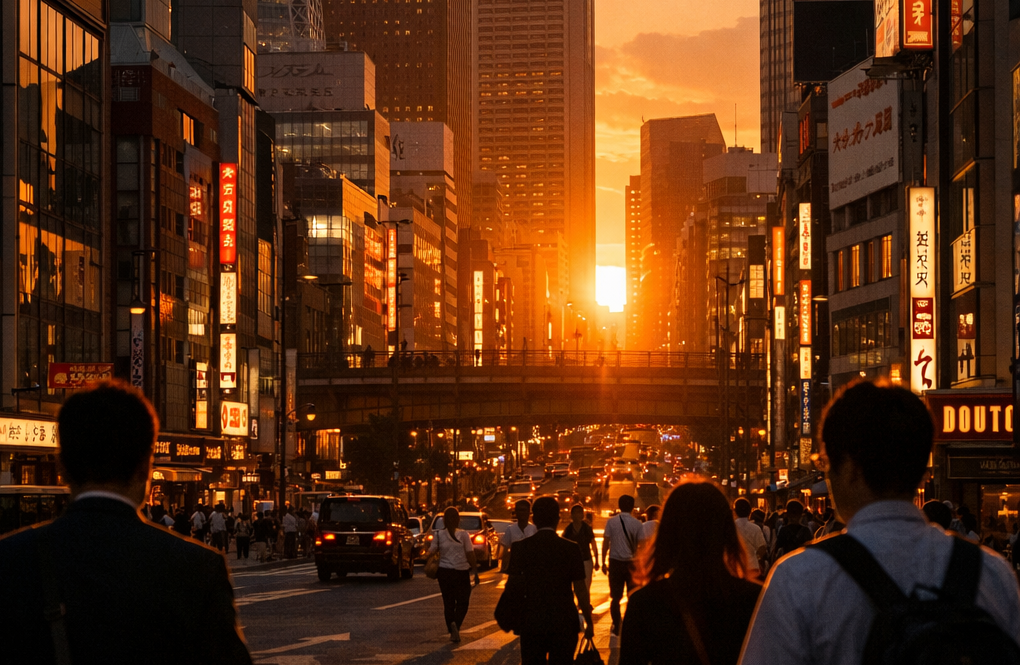
Shinjuku is both a gateway and a crossing point. Around the station there are major commercial buildings, but also shops that have been there for years, and with only a short walk, the atmosphere of the city changes completely.
Among Tokyo’s neighborhoods, Shinjuku carries an especially strong sense of cultural diversity. New things arrive, mix with older ones, and eventually become part of the everyday scenery. Shinjuku breathes in that way.
That is why this city feels suited to sweets that are neither fully Japanese nor fully Western, and yet fit naturally into the mood of Tokyo today.
Mooncake is exactly that kind of presence.
Note — Nakamuraya and Salon Culture
Founded in 1901, Nakamuraya helped introduce a number of new foods to Japan, including bread, curry, and mooncakes. Behind the shop once stood a salon where artists and intellectuals gathered, exchanging ideas and culture. Those conversations helped shape Nakamuraya’s distinctive style, one that freely moved across Japanese, Chinese, and Western traditions.
Snacks I found in the journey: Mooncake, the lingering shape of a circle
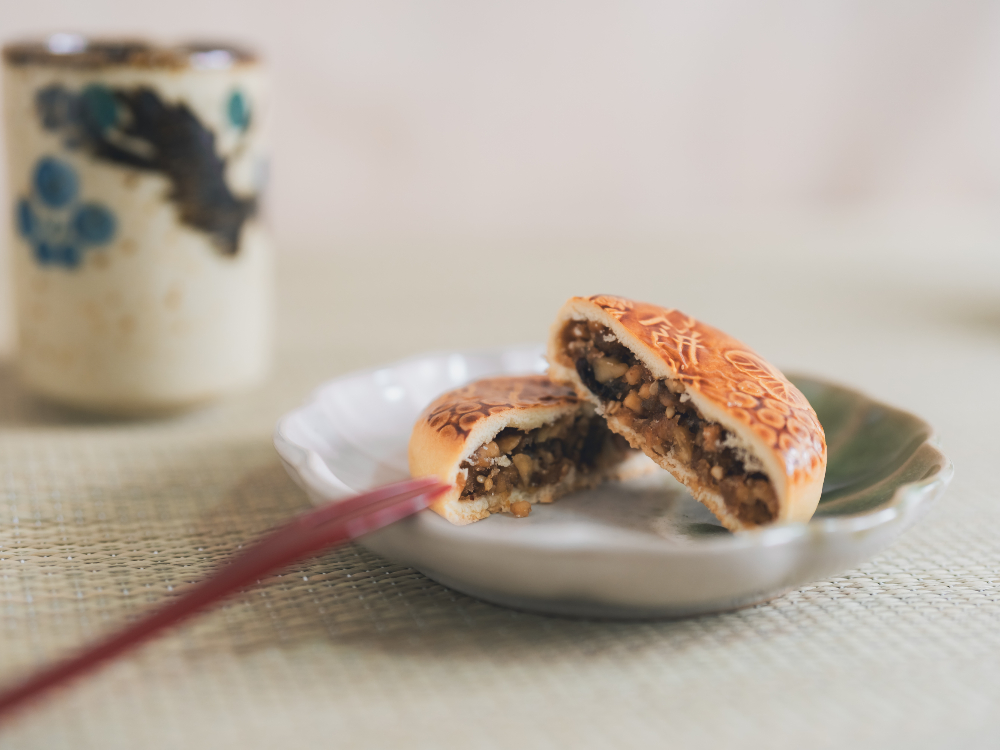
The mooncake I found that day had a certain calm weight when I held it in my palm.
Its surface carried an even, beautiful golden color. Its shape was round. And beneath its slightly glossy skin, there was a feeling of something densely held inside.
When you take a bite, the first thing to arrive is the moist texture of the crust. Then comes a sweetness with real density. It softens gently, and yet holds a quiet core.
This is not a sweet that disappears lightly. Rather, it is something that slowly opens its outline with each bite.
Mooncake has the grounded center of a Chinese confection. Its aroma, sweetness, and texture all feel gathered into one large, rounded form.
Shinjuku, too, is not simply fast. Beneath its speed, many layers overlap. And in the flavor of mooncake, I felt something close to that kind of layered city.
Mooncake as a Chinese sweet, and the way it opened in Tokyo
Mooncake is originally known as a traditional sweet eaten during the Mid-Autumn Festival in China. Its round form evokes the moon, and it has long been connected to moon-viewing and to the culture of gifting.
But in Japan, mooncake did not simply arrive unchanged. In Tokyo, it gradually took on a different expression. According to Shinjuku Nakamuraya, its founder encountered the custom of mooncakes in China, felt a connection to Japanese gift-giving culture, and brought the idea back to Japan, refining it to suit Japanese tastes and shaping it into what became a “Japanese-style mooncake.” It was first released in 1927, originally as a limited seasonal item around Mid-Autumn, and later became available year-round.
That is what feels especially Shinjuku-like to me.
Not leaving something from another culture standing apart as simply “foreign,” but receiving it, adapting it, and allowing it to grow within the life of the city.
Unlike Colombin, which evokes an encounter with the West, mooncake carries a different kind of movement: the flow of Asian culture blending into Tokyo, settling there, and taking on another expression.
This brings to mind a very Japanese sensibility: wayō secchū. In simple terms, wayō secchū is the feeling of allowing Japanese and Western elements to coexist naturally within a single style. You can see it in things like Western furniture placed in a Japanese room, or Western design blending seamlessly into everyday Japanese life.
But with mooncake, even that idea is not quite enough.
This is not only about “Japanese and Western.”
It is about a broader, quieter overlapping of many different cultures.
And mooncake seems to reflect that urban way of blending.
How to enjoy: If you want to open the outline of mooncake slowly
Paired with black tea, mooncake becomes a little lighter. Its sweetness feels cleaner, and a softness comes forward, like the air of the city in the afternoon.
And with matcha, another expression begins to open. Though it is a Chinese sweet, the gentle bitterness of matcha tightens the sweetness and allows the moist crust and the depth of the filling to emerge more quietly.
Rather than different cultures clashing in the mouth, they gather into a single aftertaste. That natural harmony also feels somehow close to the atmosphere of Shinjuku.
Next station
With its round aftertaste resting quietly inside me, I set off toward the next place. The journey of Tokyo, Connected is still continuing.
Next station: Mt. Takao.
The final stop on this journey. Beyond the energy of the city, a different stillness waits in the mountains.