
Drawing an Omikuji at Kanda Myojin: Its Origins—and Why Japanese People Love Fortune-Telling — Tokyo, Connected (Tokyo)
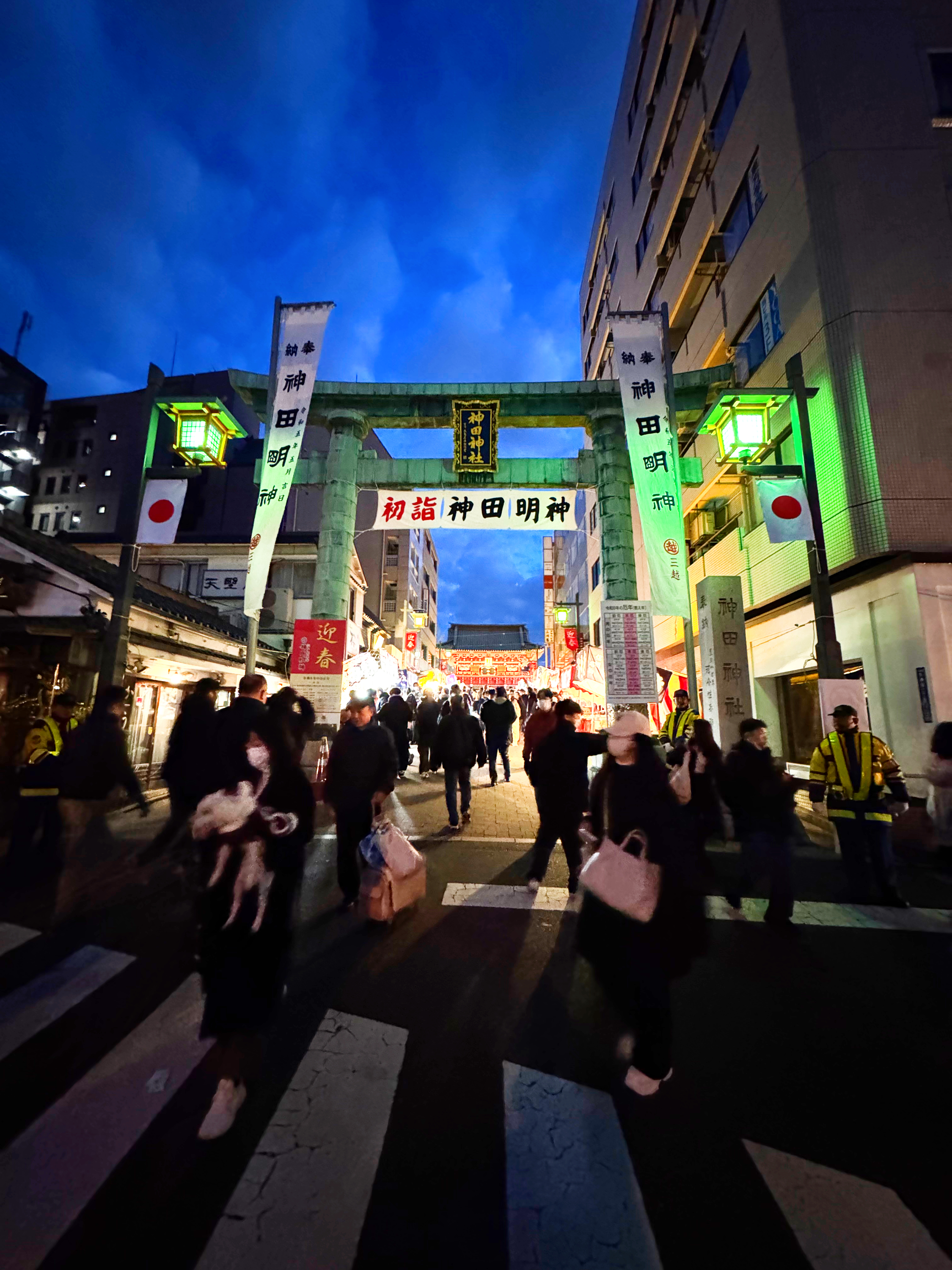
Place where I traveled: Kanda Myojin (Kanda, Tokyo)
Kanda wears a working face. Footsteps are fast. Signboards shine bright. The crosswalk signals are decisive.
But the moment you pass under the torii, the sound changes. Traffic drops one layer farther away, and the crunch of gravel comes closer. The air turns a little clearer, and your back straightens—almost on its own.
Whenever Samurai Moncha visits a large shrine, one thought appears without warning:
“I want to draw an omikuji here.”
Not as a souvenir of the trip, but to realign the direction of the heart.
And on that day— when I unfolded the paper, it read: daikichi (great blessing).
The story behind omikuji: Where did “paper fortunes” come from?
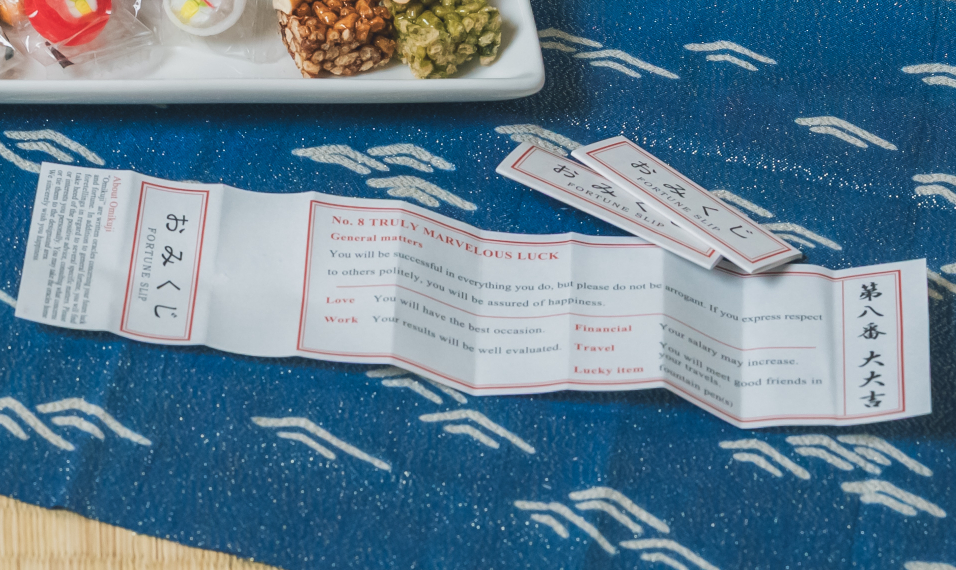
Omikuji can look like a cute little keepsake, but its roots run deeper than you’d expect. More than “fortune-telling,” it originally leaned closer to the idea of asking for divine guidance—consulting the will of the kami. (Jinja Honcho)
“Kuji” was a tool for asking the gods how to begin
In the world of shrines, there has long been a sense of using lots (kuji) to decide important matters.
For example:
Shinto rites that divine the year’s harvest or the weather
Practices that read auspiciousness by the way a turtle shell cracks
Choosing ritual roles by drawing lots
All of these share the same shape: before something begins, you pause—and look up to the gods for a direction. (Jinja Honcho)
Omikuji sits on that same extension line.
It’s said to have spread widely through a lineage connected to “Gansan Daishi (Ryōgen)”
According to Senso-ji’s FAQ, omikuji were widely popularized in Japan by Ryōgen of Enryaku-ji on Mount Hiei—also known as Gansan Daishi / Jie Daishi—and were transmitted to Senso-ji as well. (Senso-ji — FAQ)
Togakushi Shrine also explains that, based on elements brought back from Tang China, Ryōgen prayed to Kannon and shaped the practice into the form drawn at temples today. (Togakushi Shrine)
In other words, omikuji are not “shrine-only culture.” They are paper slips that took shape while staying connected—quietly—across temples (Buddhism) and shrines (Shinto).
The “omikuji you often see at shrines today” was also shaped strongly by the modern era
There’s also an explanation that, against the backdrop of the Meiji period’s separation of Shinto and Buddhism, shrines developed their own omikuji in distinct ways.
It’s often said that omikuji at shrines came to include waka poetry more frequently—suggesting that the familiar “shrine-omikuji feel” many of us recognize today was, in part, organized in the modern period. (MEIJIMURA)
So omikuji are old— and yet, properly new.
It feels like Tokyo.
Why do Japanese people draw omikuji? Loving fortune-telling, even when called “non-religious”
People often say, “Japanese are non-religious.”
But in lived reality, Japan has something that comes even before “belonging to a religion”: small rituals embedded in everyday life.
And among those rituals, the lightest— and perhaps the most loved— might be omikuji.
The reason probably isn’t just one thing.
1) Not to “decide the future,” but to focus the lens on who you are right now
Words read inside a shrine’s non-everyday air somehow feel… accurate.
Not because you can see the future, but because the world gets quieter, and the noise inside you softens.
Omikuji text isn’t an order. It’s closer to a guiding line.
Jinja Honcho also explains that omikuji may include guidance for daily life (love, travel, health, etc.) and sometimes waka poetry. (Jinja Honcho)
So when you finish reading, you can think—just slightly: “Alright. Today, I’ll walk like this.”
2) A small symbol of a turning point, left in the palm of your hand
The clearest example is hatsumode, the first shrine visit of the year.
But turning points aren’t limited to New Year’s. A job change. A move. A moment mid-journey. Anxiety without a name— thresholds arrive all year long.
And for those thresholds, omikuji are exactly the right weight.
Not too heavy. Not too light. One piece of paper becomes a clean little “cut”—a marker of change.
3) You can laugh about “hit or miss” together
Japan’s fortune culture rarely becomes too severe. Omikuji especially—it turns results into conversation.
“Daikichi!” “Wait… you can actually get ‘kyo’ (bad luck)?”
With just that, even strangers feel a little closer. Travelers and locals alike.
Samurai Moncha’s travel memo: Daikichi at Kanda Myojin
Inside the box, the numbered stick taps and clicks. Just that sound, and you can feel something in your chest align.
I unfold the paper.
Daikichi. I’m happy. Simply, honestly happy.
“Great blessing. The me of today—and the me a year from now—will both be at my best.”
Do you tie it up, or take it home? A small etiquette so you don’t get lost in Tokyo
This is the question I’m asked most often by friends abroad.
Here’s the simple answer: Follow the guidance at each shrine.
And Kanda Myojin’s FAQ states the nuance clearly:
It’s not something you must tie
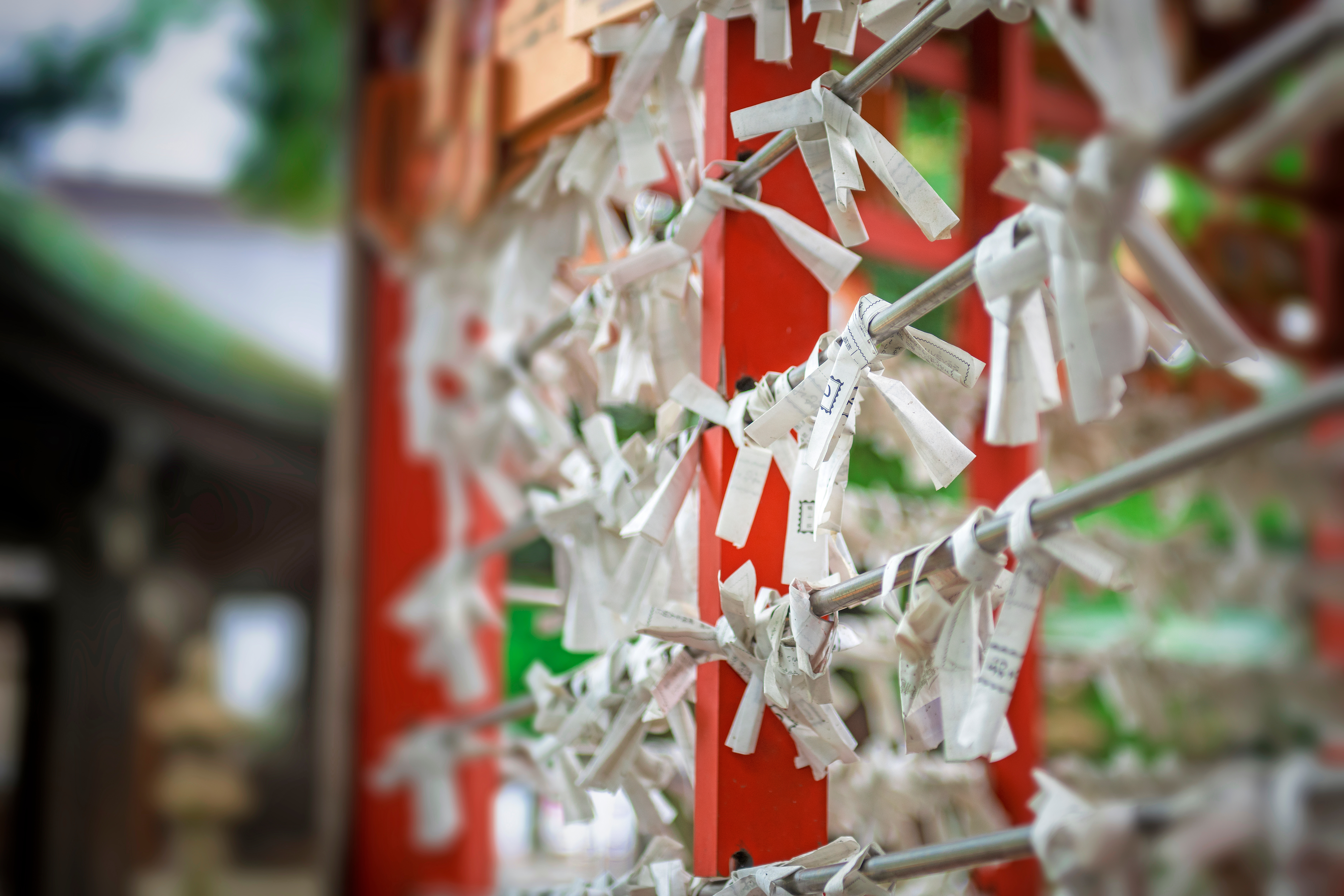
If it contains unpleasant or inconvenient things, there is meaning in tying it and leaving it behind
If it contains good things—or if you want it as a reminder—it’s fine to take it home (Kanda Myojin)
On the other hand, some shrines explain “tying” as a wordplay, too— to “tie” a bond with the gods. (Hirosaki Hachimangu — official site)
Both feel very Tokyo. A gentleness that doesn’t force one correct answer.
Next stop: Tokyo, Connected continues
At Kanda (the city’s guardian), I drew a small question called omikuji. Just one sheet of paper—yet Tokyo’s outline felt slightly different afterward.
Next is Tokyo Staion.